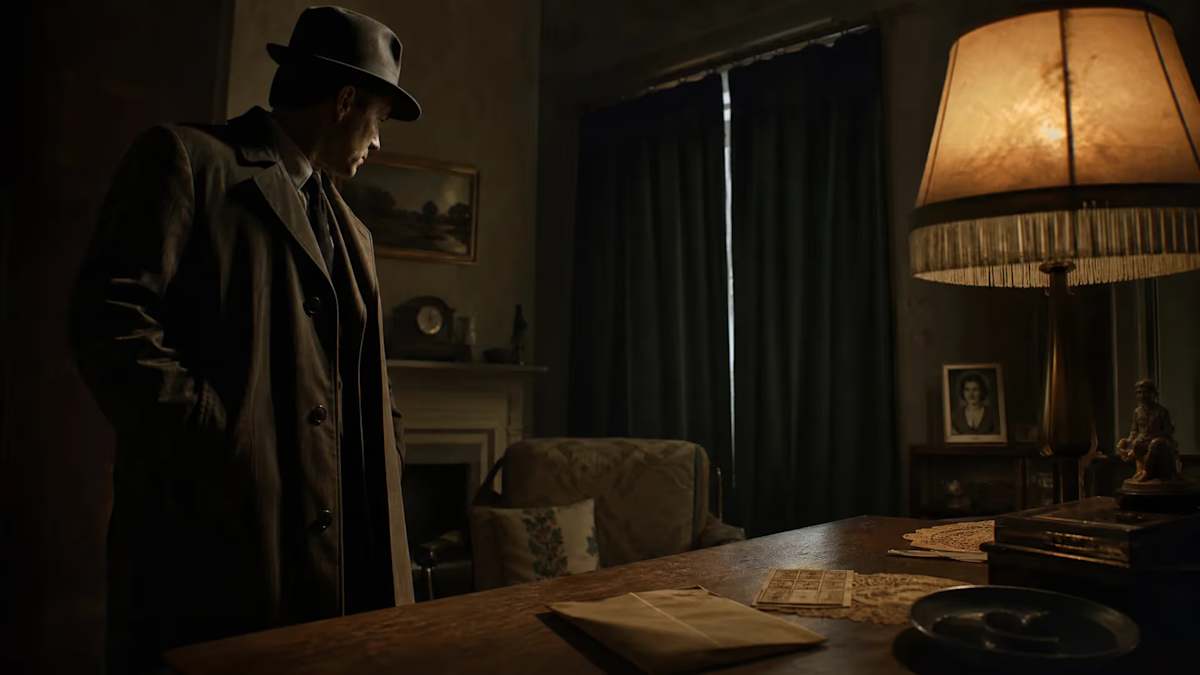
There is something about a mystery set during wartime that feels immediately, almost urgently readable. The best WWII historical mystery novels understand this instinctively, they give you the war and the puzzle in equal measure, so that you're turning pages both to find out who did it and to find out whether anyone survives the week. If you've ever finished a Christie novel and wished the stakes felt a little higher, or put down a WWII history and wished someone would just explain what was happening in the village, this is the genre that was quietly waiting for you all along.
Why Wartime Makes the Perfect Mystery Setting
Think about what a mystery needs to work: an enclosed community, heightened emotion, secrets that can't stay buried, and a reason why ordinary people are suddenly capable of extraordinary acts. Wartime England delivers all of this without any narrative cheating.
Blackout curtains mean no one can be seen coming or going. Rationing queues breed resentment and reveal character. Strangers arrive, evacuees, soldiers, government inspectors, and nobody knows quite who to trust. Letters are opened. Conversations are hushed. The village gossip, who in peacetime might seem like a minor annoyance, becomes a genuine intelligence asset.
The war also compresses emotional stakes in ways that pure detective fiction can't easily manufacture. When a body is discovered in 1942, grief and suspicion sit alongside genuine terror about what tomorrow might bring. The detective isn't just solving a crime. She's holding a community together while the world outside falls apart. That dual pressure is what makes wartime mystery books so persistently gripping, and why readers who discover the pairing rarely go back to either genre alone.
Wartime Mystery Books That Blend History and Puzzle Equally Well
The best wartime mystery series don't use the 1940s as wallpaper. They let the war shape the crime itself, the motive, the method, the cover-up, so that the puzzle couldn't exist in any other decade.
Jacqueline Winspear's Maisie Dobbs Series
Jacqueline Winspear's Maisie Dobbs series, beginning in 2003, is set partly during WWII and draws on Winspear's deep research into wartime England and its psychological aftermath, making Maisie one of the most emotionally grounded detectives in 1940s fiction. Maisie is a psychologist and investigator who carries the weight of the First World War into the second, and that layered trauma makes her unusually perceptive about what people are hiding and why.
The history here is never decorative. Winspear traces how the Blitz reshapes London neighborhood by neighborhood, how women's roles quietly shift, and how grief accumulates. If you want 1940s detective fiction with real emotional intelligence, Maisie is an essential starting point.
Rhys Bowen's Royal Spyness and Susan Elia MacNeal's Maggie Hope Series
Rhys Bowen's Royal Spyness books and Susan Elia MacNeal's Maggie Hope series both use 1940s England as a stage for amateur detection, and together they show that "cozy" and "wartime" are far from contradictory when the plotting is tight.
Royal Spyness leans warmer and wittier, following Lady Georgie through a world of aristocratic absurdity disrupted by bombs and rationing. Maggie Hope is sharper-edged, a codebreaker at Bletchley Park whose cases brush against genuine espionage. Together they show the full range of what mystery novels set in World War 2 can be: from a drawing-room laugh to a cold-sweat thriller, sometimes within the same chapter.
Alan Furst's Night Soldiers (for the darker end of the spectrum)
If you prefer your wartime mystery with the warmth turned down and the menace turned all the way up, Alan Furst is where the genre meets literary noir. Night Soldiers and his subsequent books follow operatives and bystanders caught in the machinery of prewar and wartime Europe. The plotting is quieter than a classic whodunit, but the puzzle is geopolitical and the atmosphere is genuinely oppressive.
Furst rewards patient readers. His books are less about solving a murder than about surviving a continent, and the mystery is often: who is this person really working for? It's the dark end of the spectrum, but it earns its shadows.
Mystery Novels Set in World War 2 England: The Village Tradition
Agatha Christie's Wartime-Era Miss Marple and Poirot
Agatha Christie wrote several of her most celebrated works during the actual years of WWII, living through the Blitz in London, which gives novels like N or M? and Taken at the Flood an authenticity that no amount of later research could fully replicate. You can feel the weariness in her prose, the specific texture of a world where everyone is rationing not just food but hope.
Christie wasn't writing historical mysteries set in England in 1942. She was writing contemporary mysteries set in 1942. That immediacy is irreplaceable. The paranoia in N or M? isn't reconstructed; it's reported. Reading her wartime titles now is like finding a letter tucked inside a library book, written for someone else, but speaking directly to you.
The English Village as a World in Miniature
The English village mystery endures because the village itself is a perfect closed system. Everyone knows everyone, which means everyone has a grievance, a secret, or an alibi that depends on someone else's cooperation. Under WWII conditions, this dynamic intensifies sharply.
Rationing creates class resentment in miniature, who is getting more than their share? Evacuee children arrive from cities and disturb the established order. The absence of young men reshapes every social relationship. WWII cozy mysteries set in English villages use all of this. The puzzle is intimate, but the stakes are vast, and the two scales play against each other beautifully.
Lesser-Known WWII Historical Mysteries Worth Discovering
Once you've worked through Christie and Winspear, there's a rich second tier of wartime mystery worth finding.
Susan Elia MacNeal's Maggie Hope series is genuinely underread outside core mystery circles. Maggie begins as a mathematician recruited to Bletchley and moves through increasingly dangerous assignments across occupied Europe. The historical research is careful and thorough, and MacNeal never lets the spy thriller mechanics crowd out the human story at the center.
Catriona McPherson's Dandy Gilver series is set slightly earlier, the interwar years, but her atmospheric precision about Scottish rural communities translates directly into the wartime sensibility. Readers who love the village tradition and want something off the beaten path of southern England will find Dandy a warm and very funny companion.
Michael Pearce's Mamur Zapt series moves the war's edges to Cairo and the British colonial administration in Egypt, a genuinely unusual setting that reminds you the 1940s extended far beyond the English countryside. Pearce writes with sharp wit and genuine affection for place, and the political complexity of his Cairo is unlike anything else in the genre.
All three reward readers who've loved the bigger names and are ready for something that feels like a discovery rather than a recommendation.
What to Look for in the Best WWII Historical Mystery Novels
Not every novel with a ration book in it is worth your time. The best WWII historical mystery novels share a few qualities that are easy to spot once you know what you're looking for.
First, the history should shape the crime, not just decorate it. If the murder could have happened in 1923 or 1963 with minor adjustments, the wartime setting is doing cosmetic work, not structural work. A great wartime mystery has a motive, a method, or a cover-up that is specific to this moment, a black-market scheme, a forged identity, a secret that only matters because the government is watching.
Second, the detective needs a genuine emotional stake in the war's outcome. Miss Marple's village being disrupted by evacuees, Maisie Dobbs carrying her own grief forward from the Somme, these investigators feel the war personally, and that personal pressure makes their reasoning feel urgent rather than academic.
Third, the puzzle should be satisfying on its own terms. Wartime atmosphere is wonderful, but it can't substitute for a well-constructed mystery. The clues should be fair, the resolution should surprise and then immediately feel inevitable, and the final explanation should leave you wanting to reread the opening chapter immediately.
Our Own Corner of Wartime England: The Homefront Sleuths Series
We came to this genre as devoted readers before we ever wrote a word of it, and everything above describes the tradition we've tried to honor in our own work.
Our Homefront Sleuths series is set in the fictional village of Crofter's Green in 1942, a deliberate choice to place readers at the exact midpoint of the war, when hope and dread coexisted in every kitchen and every letter home. Historical mysteries set in England in 1942 carry a particular quality of suspense: the outcome is not yet known, the losses are already real, and the community must hold itself together through sheer collective will. That's the atmosphere we write into every chapter.
We're Anna Elliott and Charles Veley, a father-daughter team who also write the long-running Sherlock and Lucy series. That background in classical detective fiction structure shapes how we build every Crofter's Green puzzle: clues laid fairly, a detective with real emotional skin in the game, and a resolution that belongs specifically to the 1940s and nowhere else.
The Homefront Sleuths are, we hope, exactly what you'd reach for after finishing Maisie Dobbs or N or M?, familiar enough to feel like coming home, fresh enough to keep you up past midnight.
If Crofter's Green sounds like somewhere you'd like to spend an evening, we'd love to have you. Browse the series, or sign up for our newsletter to hear about new cases as they arrive. The kettle is always on.